
Intro
Good pronunciation is one of the best investments you can make when learning a language. It forms the foundation for everything that comes later: listening, speaking, reading, and even remembering new vocabulary.
Many beginners rush through pronunciation because they want to start learning words and having conversations as quickly as possible. Unfortunately, that often leads to building incorrect pronunciation habits that become harder to fix over time. While it’s certainly possible to improve your pronunciation later, it’s much easier—and much less frustrating—to build good habits from the beginning.
The good news is that Spanish is one of the easiest languages for English speakers to pronounce accurately. Unlike English, Spanish has a very consistent relationship between letters and sounds. Once you learn the pronunciation rules, you’ll be able to correctly pronounce almost any Spanish word you encounter, even if you’ve never seen it before.
This article will explain why that is, introduce the idea of phonetic languages, and show you how to use technology and deliberate practice to develop clear, natural pronunciation from the very beginning.
Phonetic vs. non-phonetic languages
Spanish pronunciation is a system. Once you learn the pronunciation rules, you can correctly pronounce virtually any Spanish word—even one you’ve never seen before. We call this a phonetic language because the written letters consistently correspond to the same sounds.
English is much less phonetic. While there are many spelling patterns, there are also countless exceptions. As a result, English pronunciation often has to be memorized one word at a time instead of being derived from a consistent set of rules.
Let’s look at a few examples.
In Spanish, the letter a is always pronounced the same way. It doesn’t change depending on the word. The a in hola sounds exactly the same as the a in arpa.
English doesn’t work like this. The letter a in cat is pronounced differently from the a in tall. This is one of the reasons English dictionaries usually include IPA (International Phonetic Alphabet) symbols. Here is the IPA transcription for the word cat.

The symbol æ represents the sound made by the letter a in this word. Now compare that with the IPA transcription for tall (American pronunciation appears on the right side of the dollar sign).

Here, the sound of the letter a is represented by the symbol ɒː. This can be extremely confusing for someone learning English, especially if their native language is highly phonetic. How are you supposed to know that the a in cat is pronounced æ, while the a in tall is pronounced ɒː?
You simply have to memorize it.
The same problem appears throughout English spelling. Consider the letters oo.
“oo” pronounced as ʌ
- blood (blʌd)
- flood (flʌd)
“oo” pronounced as ʊ
- book (bʊk)
- look (lʊk)
- took (tʊk)
- foot (fʊt)
“oo” pronounced as uː
- food (fuːd)
- spooky (ˈspuːki)
- tattoo (tæˈtuː)
Do you see how confusing this is? If you encounter a new English word containing oo, how are you supposed to know which pronunciation to use?
Again, you simply have to memorize it.
English becomes even more confusing with heteronyms—words that are spelled the same but pronounced differently depending on the context. Consider the word read.
I read for 30 minutes every day. (“read” is pronounced riːd.)
I read your email yesterday. (“read” is pronounced red.)
Most monolingual English speakers don’t consciously realize how unusual this is because they’ve spent their entire lives memorizing these exceptions. As a result, many don’t fully appreciate the difference between a highly phonetic language like Spanish and a much less phonetic language like English.
English certainly has spelling patterns, but it also has so many exceptions that native speakers learn to expect surprises. They know that just because a word is spelled a certain way doesn’t necessarily mean it will be pronounced the way they expect.
Spanish is different.
When most people begin learning another language, they naturally apply the pronunciation rules of their native language to the new language. This is one of the main reasons foreign accents develop.
For native English speakers, this often means guessing how a Spanish word is pronounced based on English spelling rules. That’s exactly what you don’t want to do.
Spanish is highly phonetic. You don’t have to guess how a word is pronounced. Once you know the pronunciation rules, you can correctly pronounce virtually every Spanish word—even one you’ve never seen before.
If you catch yourself guessing the pronunciation of a new Spanish word, stop. Look at the letters and sound them out according to the pronunciation rules you’ve learned. The letters consistently represent the same sounds. Learn those patterns once, and you’ll never have to wonder how a new Spanish word is pronounced again.
This is exactly what the pronunciation flashcards are designed to teach. Rather than memorizing the pronunciation of thousands of individual words, you’ll learn the underlying pronunciation system. Once you understand the patterns, your brain has far less to memorize, making learning both faster and easier.
Understanding the pronunciation system is only the first step. The next step is training your ears and your mouth to produce those sounds accurately. Fortunately, modern technology makes that easier than ever.
Recommended reading:
These articles are very useful regardless of which language you are studying.
Pronunciation Resources
ENGLISH
Please see English Pronunciation Resources
SPANISH
Please see Spanish Pronunciation Resources
How to use technology to enhance your pronunciation
One of the biggest advantages of learning a language today is that technology allows you to get immediate feedback on your pronunciation. You no longer have to guess whether you’re saying a word correctly. With the right tools, you can compare your pronunciation directly with that of a native speaker and make small adjustments until they sound nearly identical.
I’ve always had strong pronunciation in Spanish. I can often surprise native speakers because they don’t immediately recognize English as my native language. Many ask where I’m from before realizing I’m an American. My accent isn’t perfect, but it’s clear and natural enough that I can comfortably communicate with native speakers from all over the Spanish-speaking world.
How did I develop my pronunciation?
I made it a priority from the very beginning, and I was willing to experiment with some unconventional practice methods. The two techniques below had the biggest impact on my pronunciation.
Record your own voice, compare it with a native speaker
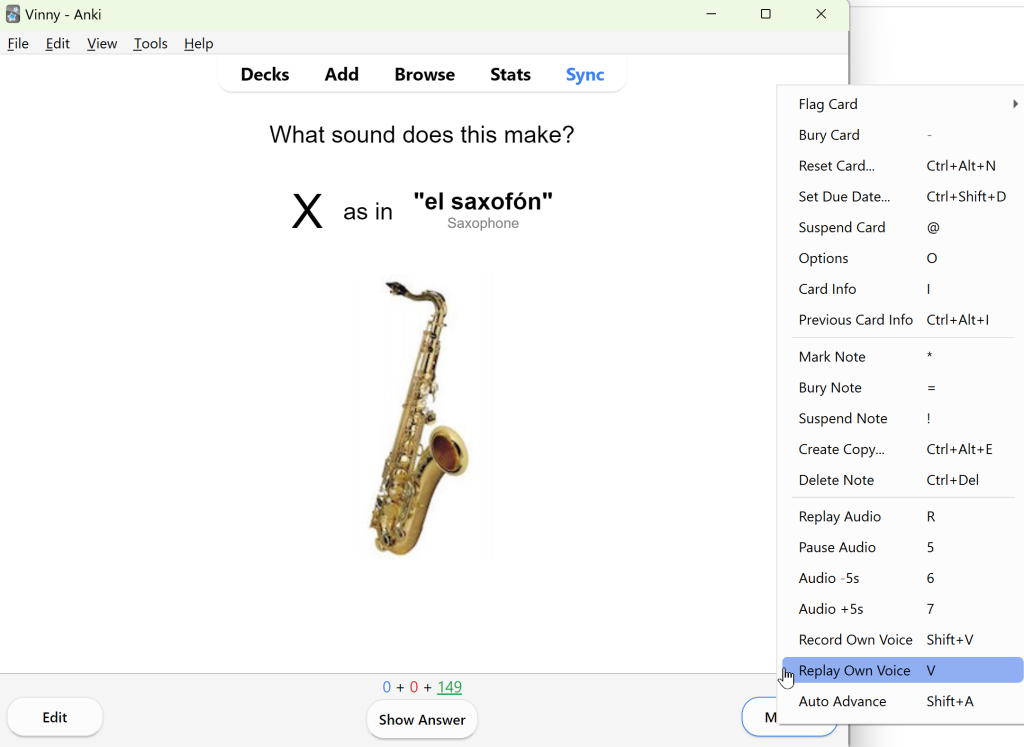
Anki allows you to record yourself while reviewing your flashcards and compare your pronunciation directly with the native speaker audio included on the card.
Many learners are surprised the first time they hear themselves speaking a foreign language. You’ll often notice mistakes that were completely invisible while you were speaking. Hearing yourself from the listener’s perspective makes those mistakes much easier to identify and correct.
Keyboard shortcuts:
- Shift + V — Record your voice
- R — Play the native speaker audio
- V — Play your recording
Record yourself before listening to the native speaker. Then compare the two recordings carefully. Listen for differences in the vowels, consonants, rhythm, and stress. Record yourself again and continue making small adjustments until your pronunciation sounds as close as possible to the native speaker.
This immediate feedback loop is one of the fastest ways to improve your pronunciation because you’re constantly comparing your production against a correct model.
Watch the mouth and use a mirror to imitate the face of native speakers
Pronunciation isn’t just about what you hear—it’s also about how you move your mouth.
Keep a small mirror next to your computer while you study. As you watch videos, pause occasionally and repeat what the speaker says while trying to imitate not only the sounds but also their mouth movements, tongue position, and facial expressions.

This technique is also extremely effective during lessons or language exchanges. If a particular word is giving you trouble, ask your teacher or language partner to repeat it slowly while you watch their mouth. Then look in the mirror and compare your own mouth position with theirs. Small adjustments can often make a surprisingly large difference.
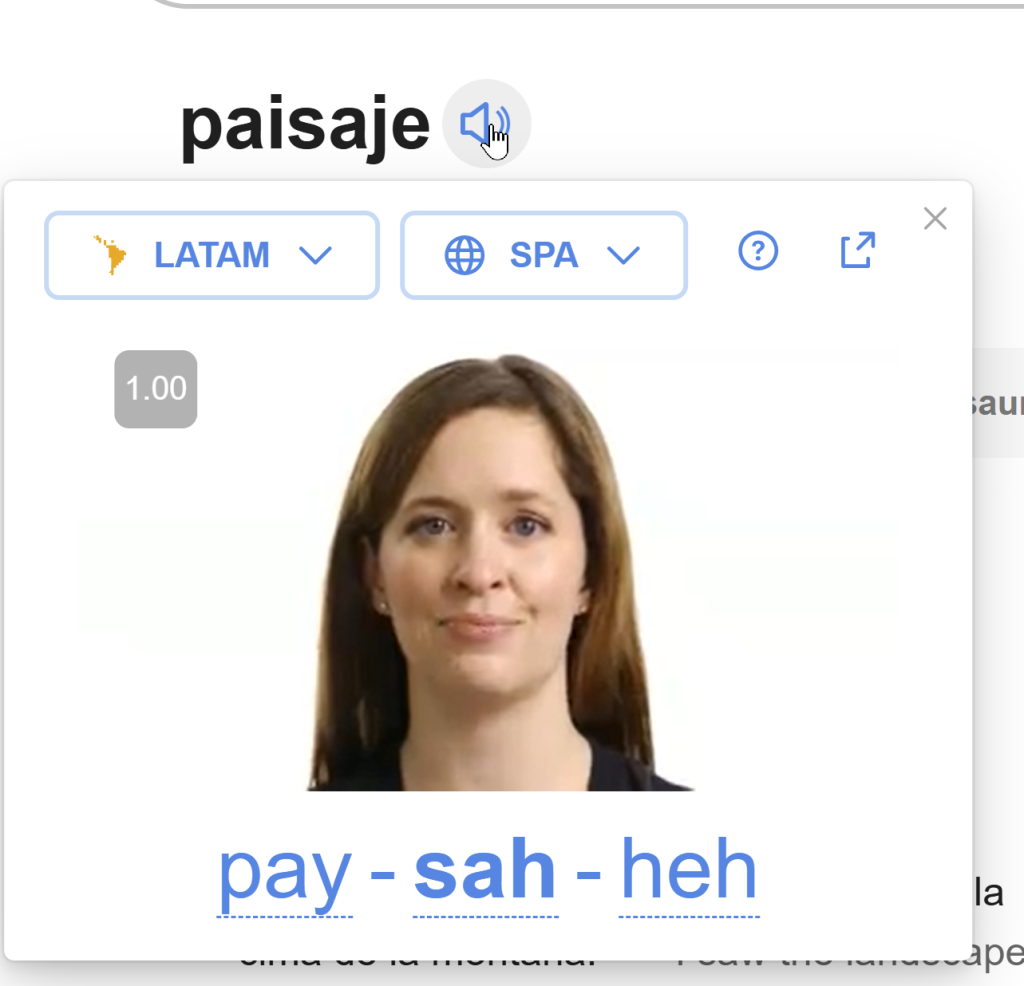
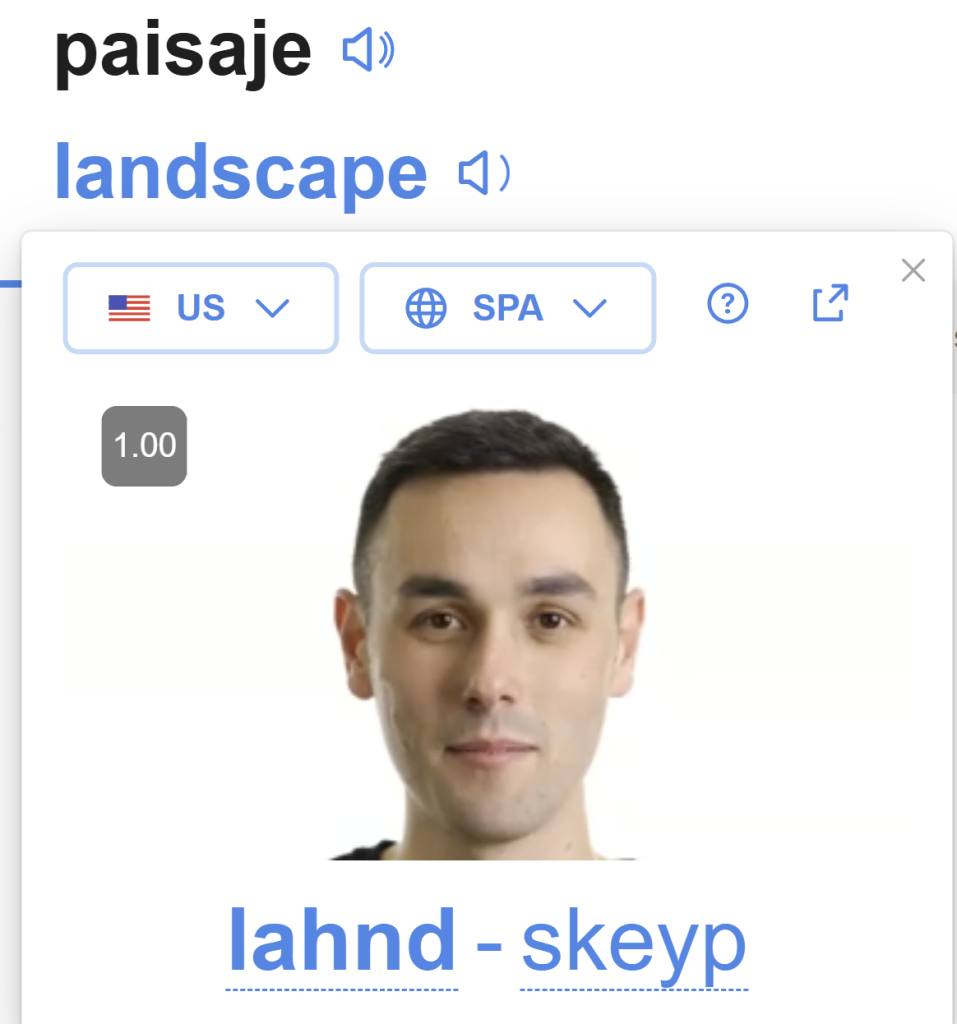
SpanishDict.com includes short videos with slow pronunciation for the most common words in English and Spanish. Just click the sound button and select your preferred pronunciation.
Putting It All Together
Pronunciation isn’t a talent—it’s a skill. Like every other skill, it improves with deliberate practice and good feedback. If you take the time to build a strong pronunciation foundation now, everything else in Spanish becomes easier. You’ll understand native speakers more easily, they’ll understand you more easily, and you’ll spend far less time correcting bad habits later. Invest the time now. Your future self will thank you.
Leave a Reply
You must be logged in to post a comment.