
Intro
None of these flashcards, audio lessons, or other learning resources will work very well unless you use them very consistently for more than 6 months, maybe more than a year. This is one of the most important parts of the guide. In this tutorial, you’ll decide on a consistent amount of time to spend studying every week. Then I’ll show you how to use time blocking in Google Calendar to create a study schedule.
Tutorial
How many hours per week?
You will study all of the recommended resources on a weekly schedule. There are 3 different levels, depending on how fast you want to learn:
- Casual: 5 hours/week MINIMUM
- Moderate: 7.5-12.5 hours/week
- Intensive: 12.5-20 hours/week
| Resource | Casual | Moderate | Intensive |
| Flashcards, 30-60 min | 3 times/week | 4-5 times/week | 6-7 times/week |
| Pimsleur Audio Lessons, 30 min | 3 times/week | 4-5 times/week | 6-7 times/week |
| Grammar Course | 1 hour per week | 2-3 hours/week | 4-6 hours/week |
| Input (reading & listening), 30 min | 2 times per week | 3-4 times/week | 5-7 times/week |
Here you can see the minimum and maximum amount of time that you need to spend on each task.
Casual
Estimated time to fluency: 1-2 years
- Flashcards: MIN: 1.5 hours/week
- Pimsleur Audio Lessons: MIN: 1.5 hours/week
- Grammar Course: MIN: 1 hour/week
- Input: MIN: 1 hour/week
TOTAL: 5 hours/week
Moderate
Estimated time to fluency: 1 year
- Flashcards:
- MIN: 2 hours/week
- MAX: 5 hours/week
- Pimsleur Audio Lessons:
- MIN: 2 hours/week
- MAX: 2.5 hours/week
- Grammar Course:
- MIN: 2 hours/week
- MAX: 3 hours/week
- Input:
- MIN: 1.5 hours/week
- MAX: 2 hours/week
TOTAL: 7.5 to 12.5 hours/week
Intensive
Estimated time to fluency: 6 months to 1 year
- Flashcards:
- MIN: 3 hours/week
- MAX: 7 hours/week
- Pimsleur Audio Lessons:
- MIN: 3 hours/week
- MAX: 3.5 hours/week
- Grammar Course:
- MIN: 4 hours/week
- MAX: 6 hours/week
- Input:
- MIN: 2.5 hours/week
- MAX: 3.5 hours/week
TOTAL: 12.5 to 20 hours/week
Time Blocking
You get the best results by using time blocking—time blocking means reserving time in your calendar to do your daily study routines. Let’s use the Moderate level study routine as an example. I’m using Google Calendar, but you can use any calendar app you want.
Flashcards
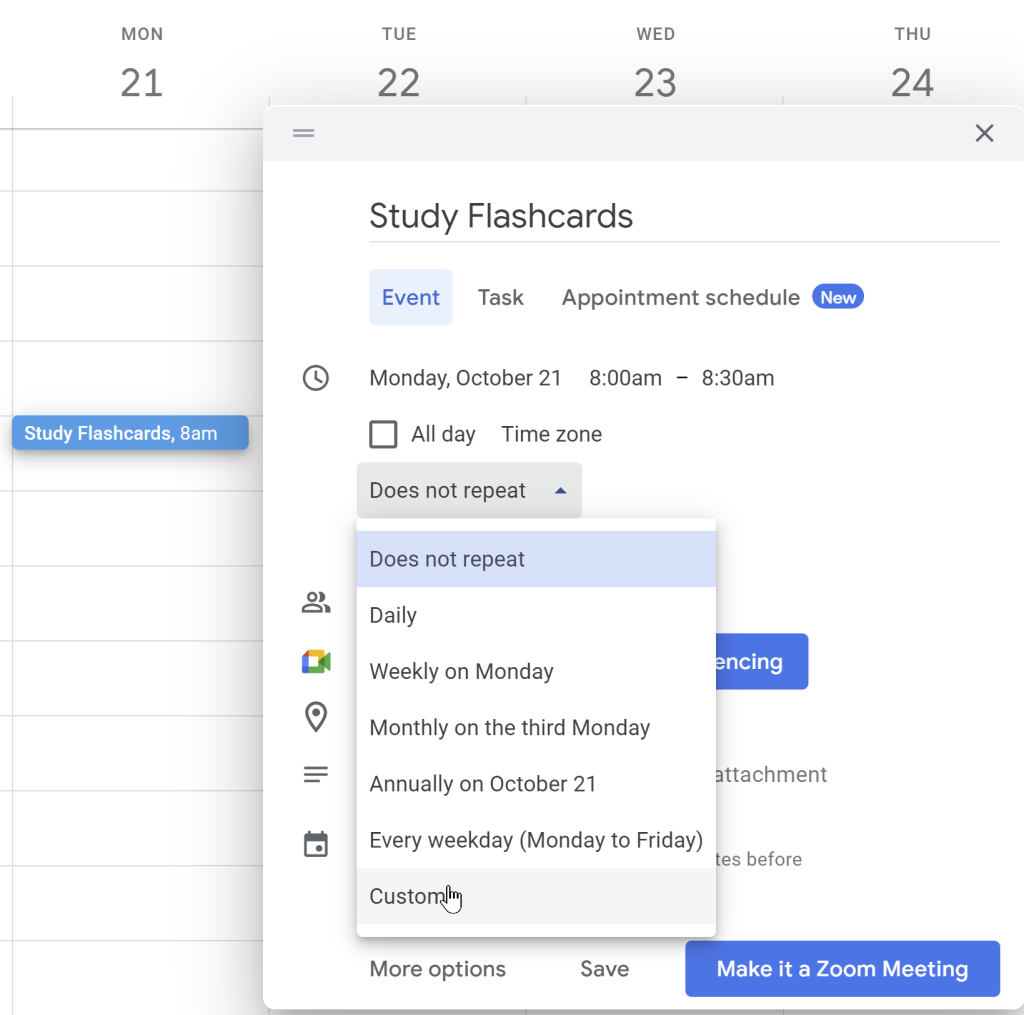
First, I’ll add my flashcard study routine. I want to study my flashcards Monday through Friday for 30 minutes in the morning. I can create a block on my calendar that repeats Monday through Friday. I’ve created a new block at 8:00 am on Monday. I can set the repeat options by clicking Custom.
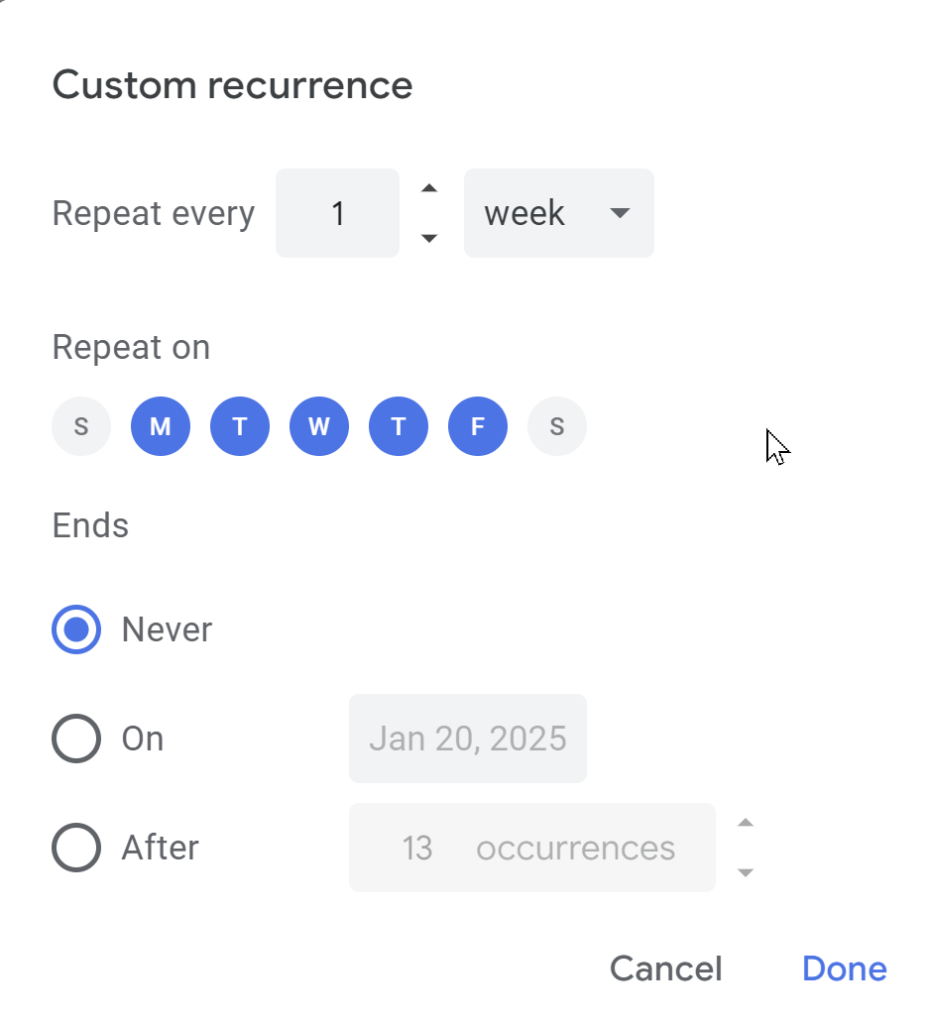
Then I select Monday through Friday and click Done.
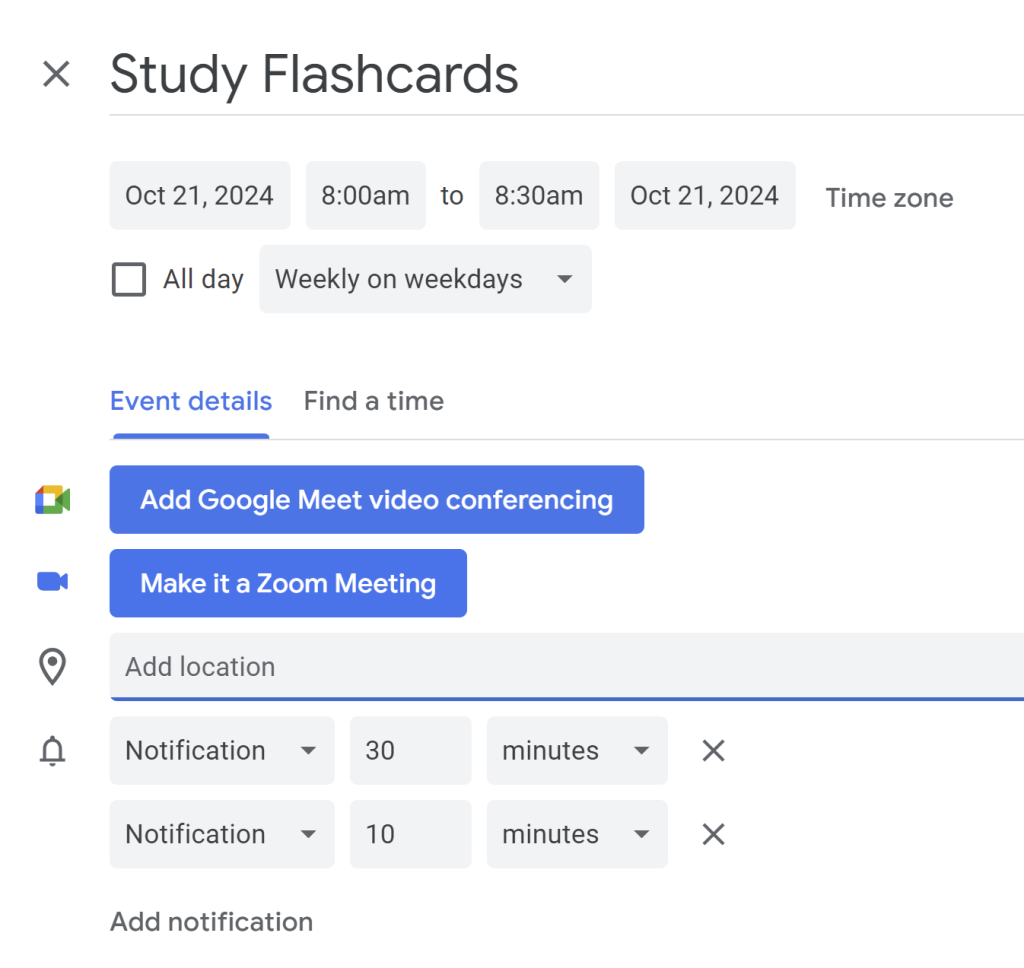
Under More options, I can set notifications, so I don’t forget. If you forget easily, you may want to set more than one reminder. Below you see I’ve set it to remind me 30 minutes before and 10 minutes before my study time.
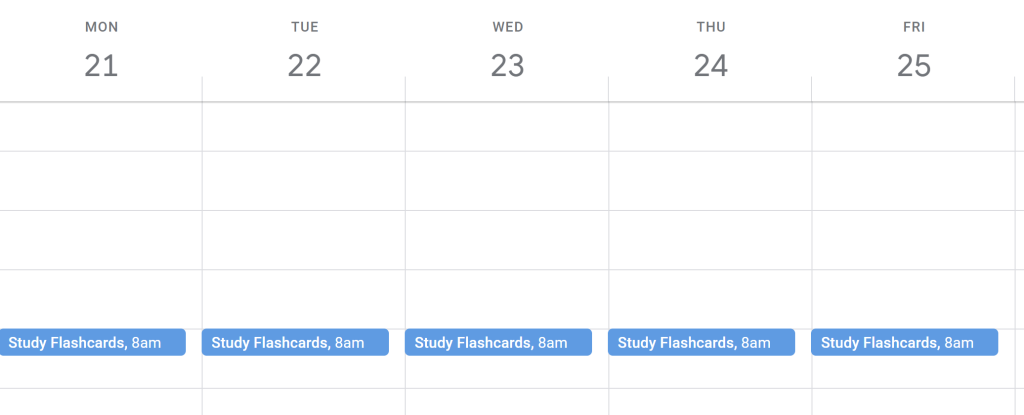
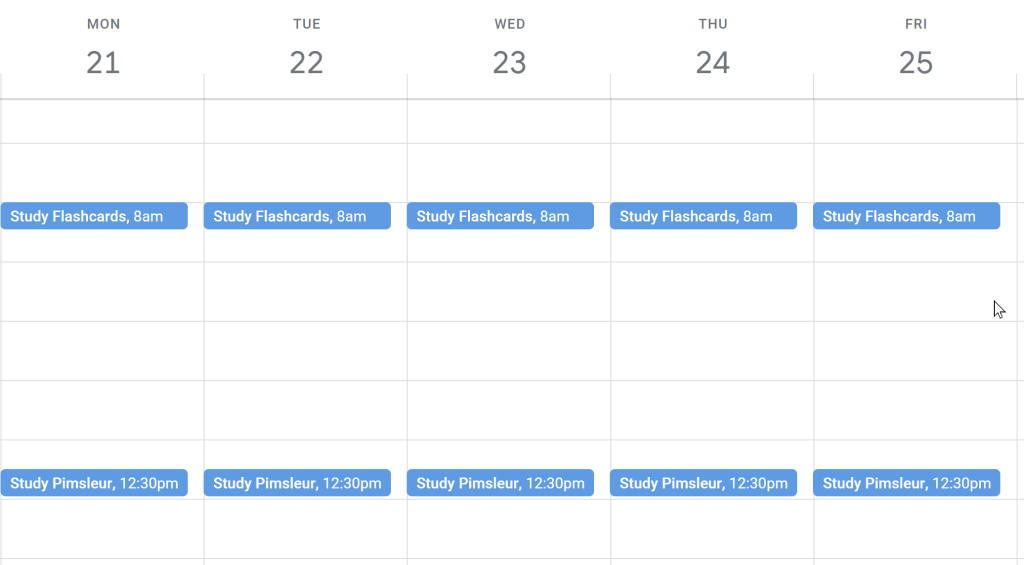
After I click save, I can see my flashcard study block on my calendar.
Pimsleur Lessons
Now I’m going to add my Pimsleur lessons. I have 30 minutes during my lunch break. I follow the same process. I create a new block, set the time, repeat, and notification options.
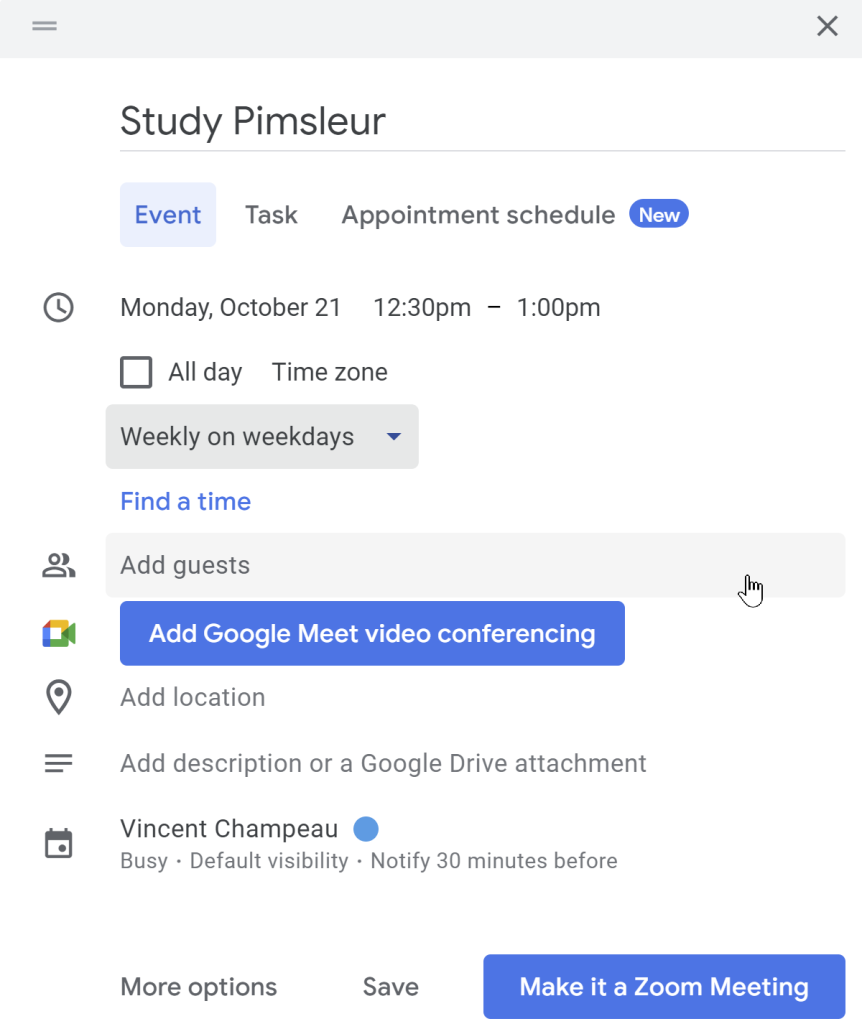
Great, now I have time reserved for my flashcards and my Pimsleur lessons.
Grammar and Input
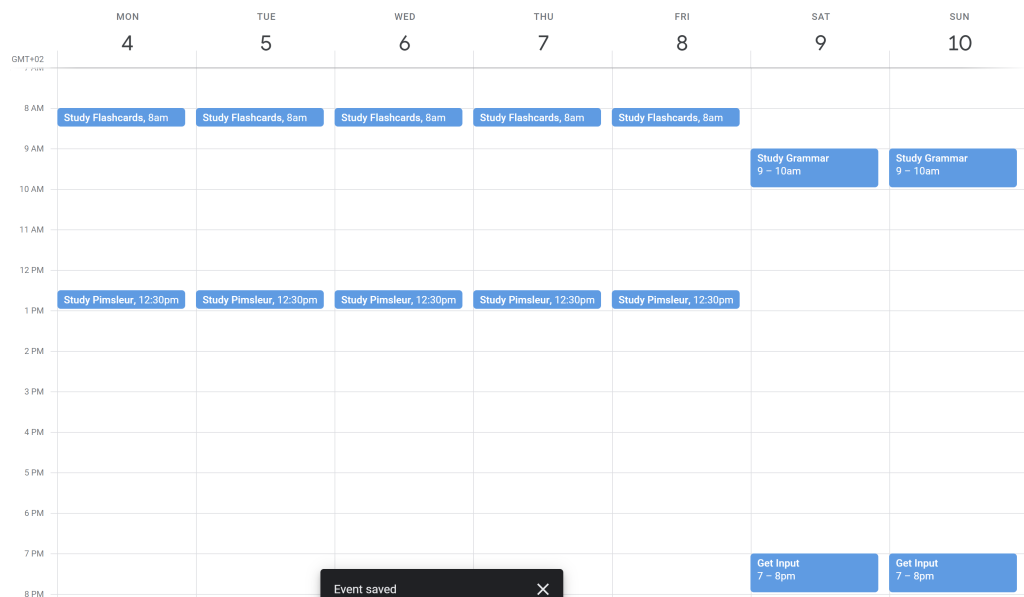
I took care of all the hard stuff from Monday to Friday. I can spend time with some easier, less intense forms of study on the weekend. Let’s block off some time for grammar and input. I created a new block that repeats at 9:00 am on Saturday and Sunday.
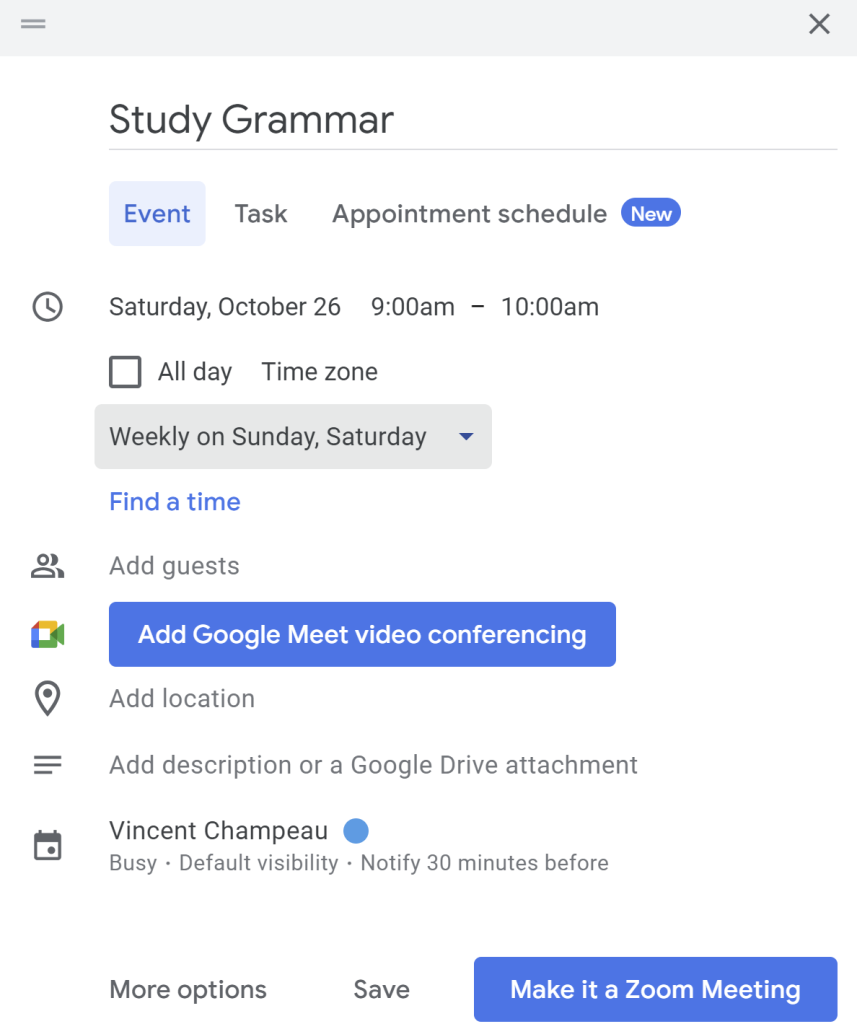
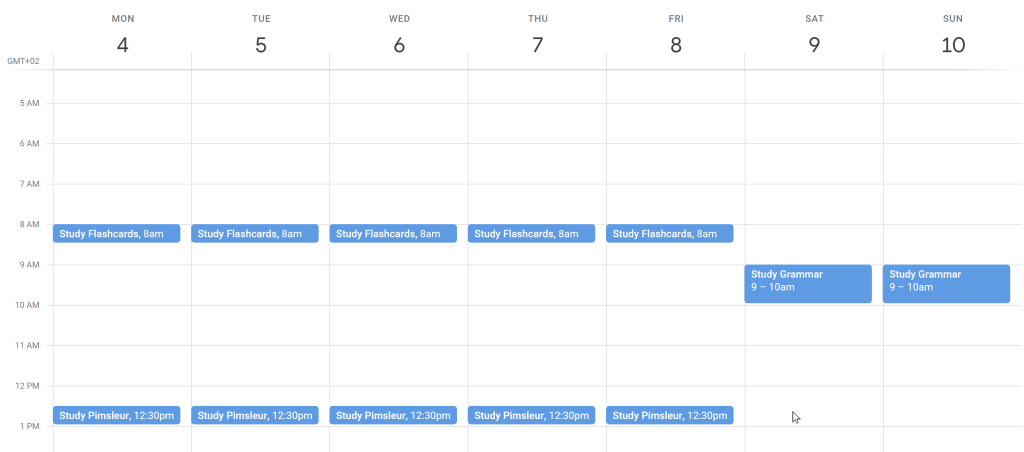
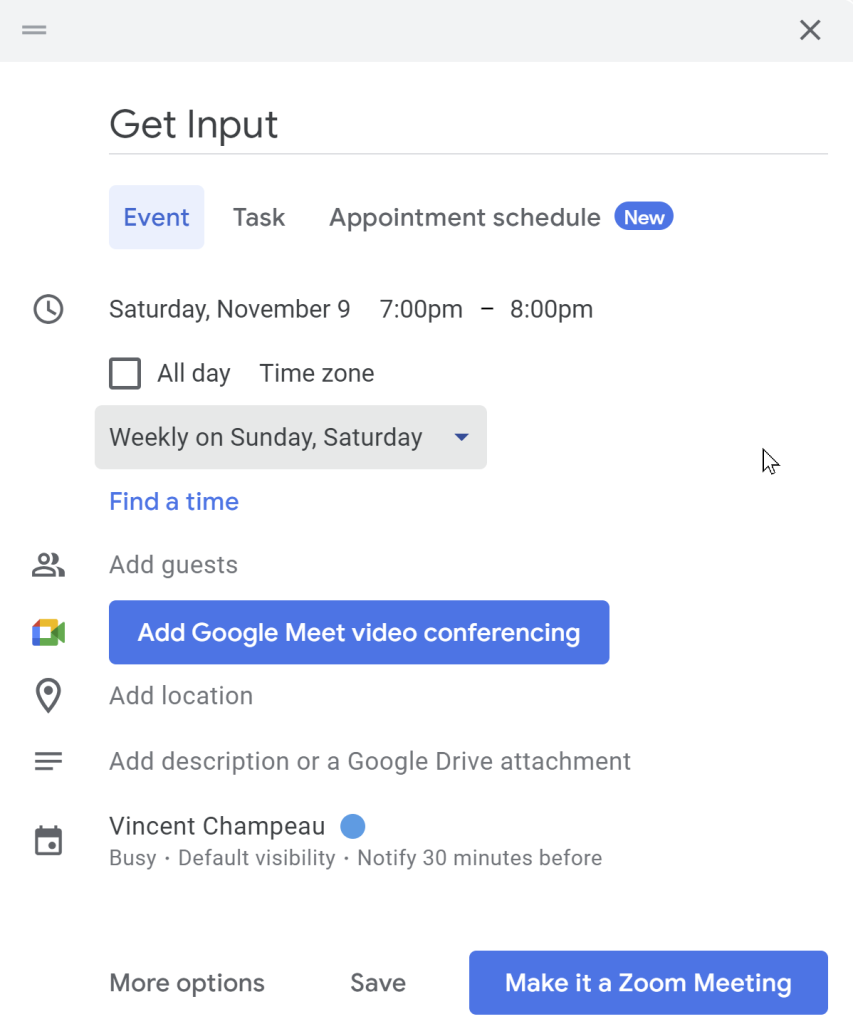
Lastly, I’ll add 2 more blocks for input. This will be my most relaxing form of study because I will spend time listening to audiobooks or reading books. These activities will feel less demanding and taxing on my brain than studying flashcards or listening to Pimsleur lessons.
Now I have a complete study schedule of 9 hours per week.
Final Advice
Once you have established your study routine, don’t change it! The more you repeat your routine, the easier it will get. To help you take your schedule more seriously, imagine that you have real appointments with real people. You can even imagine it like having a part-time job. You have to punch in and do your work according to the schedule. Try your best not to change the schedule, but if you do have to, make up any lost time. Set your goal and make sure you always complete the number of hours you intended to study.
Leave a Reply
You must be logged in to post a comment.