Intro
This tutorial will explain the different parts of the AnkiMaster flashcard system and how to study the different types of AnkiMaster flashcards.
AnkiMaster is like a gym for your brain and the flashcards are like different exercise machines.
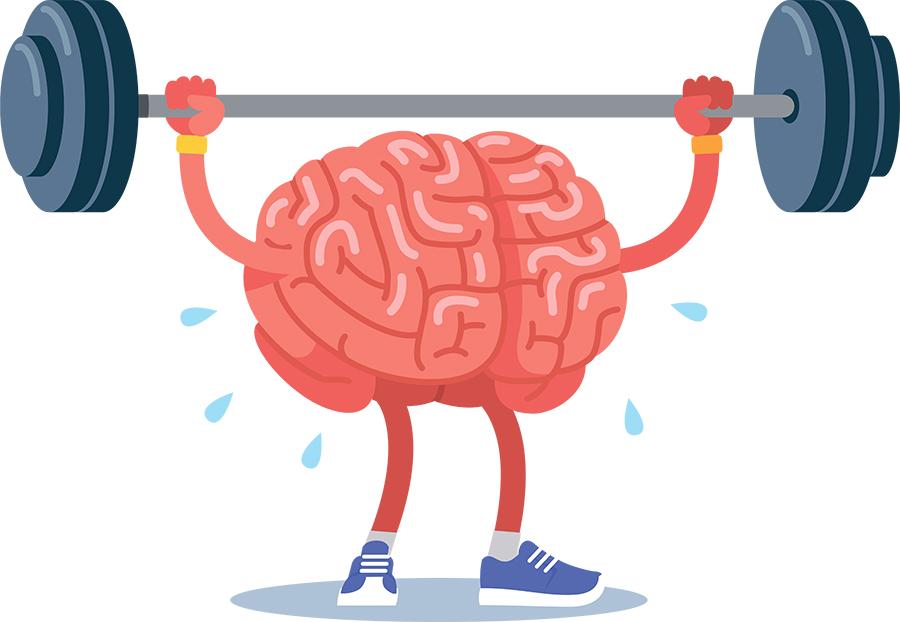
Each type of flashcard will exercise different parts of your brain. AnkiMaster flashcards are designed to work on all of the primary language skills: pronunciation, vocabulary, listening, and reading. Combining all the different types of flashcards gives you a full brain workout. Just like exercise machines, it’s very important to use them correctly or they will not work. Fortunately, there is no risk of injury. You only risk wasting your time by learning slower and less effectively!
In this tutorial, we will cover
- How to open your flashcards
- How to read your flashcards
- The different types of flashcards and how to study them
How to open your flashcards
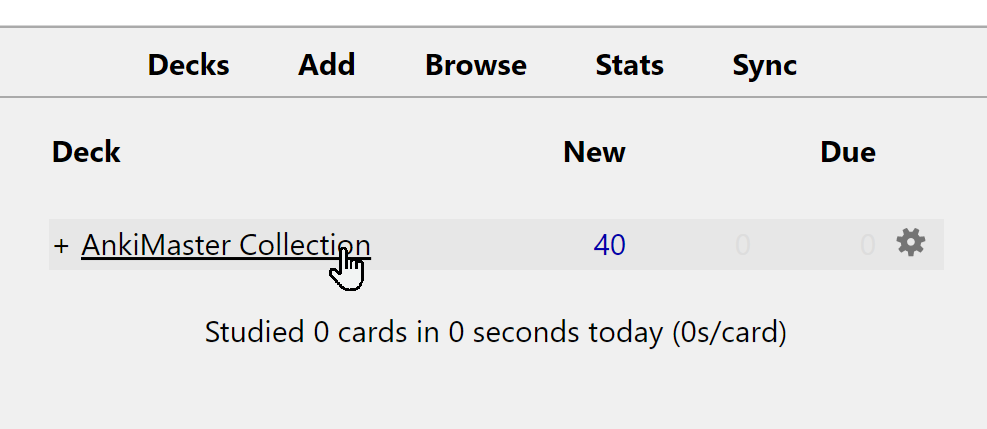
Click the deck.
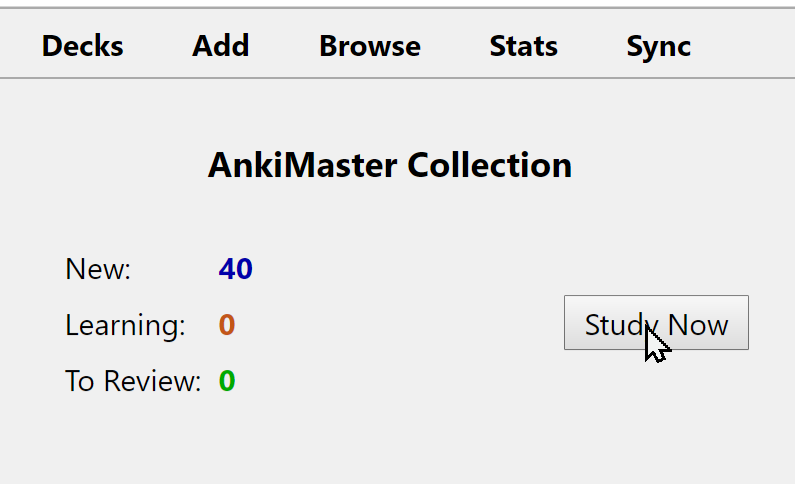
Click ‘Study Now’
How to read your flashcards
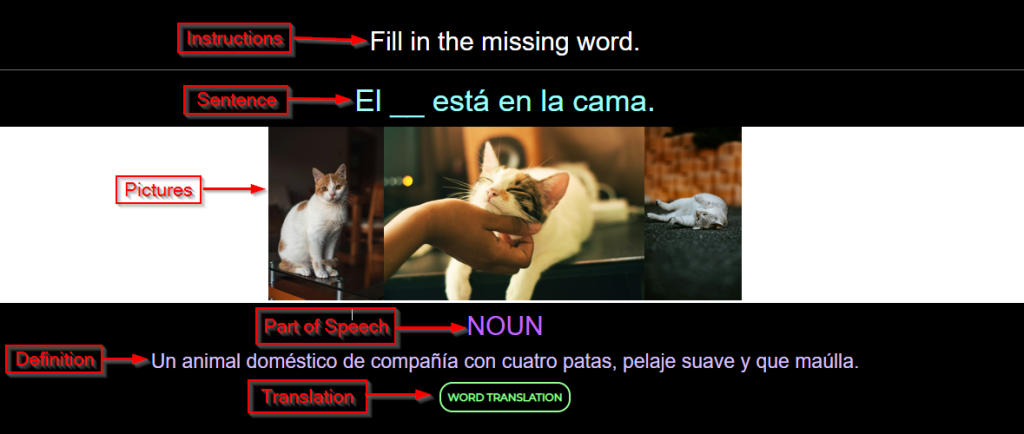
Every piece of information on the flashcards appears in a different color. This is the front of a flashcard for the word “gato.”
Different Types of AnkiMaster Flashcards
There are different types of AnkiMaster flashcards to exercise your brain in different ways. Each flashcard has specific rules.
New Word Card
The flashcard I just showed you is called a New Word card. It is used to introduce you to a new word. On the front of the card, you will see
- A sentence with a blank
- Pictures related to the missing word
- A definition of the missing word
On the back of the card, you will see:
- The missing word with sound
- The complete sentence with sound
Let’s look at another example of a New Word card and talk about the rules for passing or failing.
Front side
Here I am trying to guess the Spanish word for “small.”

Look at the front of the card.
- Look at the pictures. If you remember the word, read the sentence and say the missing word out loud.
- If the pictures are not helping you remember, look at the definition.
- If the definition doesn’t help you remember, click on the hidden translation (green box)
It doesn’t matter if you guess the wrong form of the word (e.g. “pequeño” instead of ‘pequeña’, ‘tengo’ instead ‘tiene’, etc.). You just need to remember a correct form of the word.
Back side
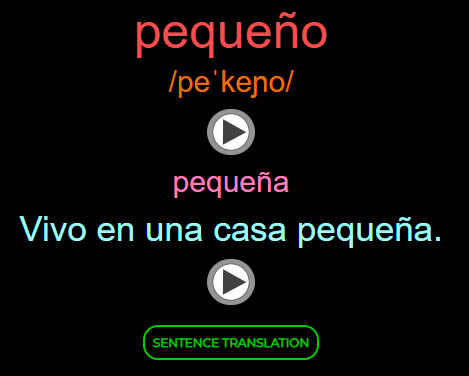
Look at the back of the card.
- Listen to the audio.
- Repeat the word and the sentence out loud.
Success = you remembered the correct word. Maybe you guessed a different form of the word, but that’s ok.
Failure = you couldn’t remember the word, or you remembered the wrong word.
How to grade yourself
If it was hard to remember, click ‘Hard’; if it was easy to remember, click “Good”; if it was super easy to remember, click ‘Easy.’

If you couldn’t remember the information or you remembered the wrong information, you failed (try again). Click ‘Again’.

Word-Sentence Card
We want to make sure your brain can go both ways, English->Spanish and Spanish->English. Now we have a flashcard that gives you Spanish, and you say the English.
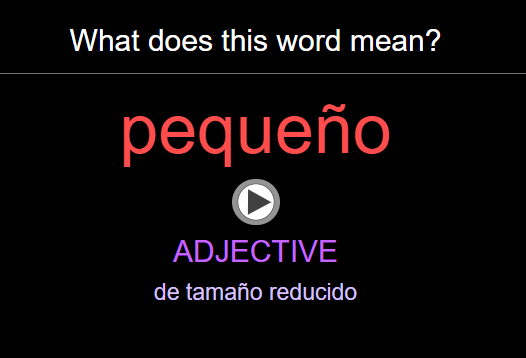
Front side
- A word with sound
- The part of speech and definition of the word
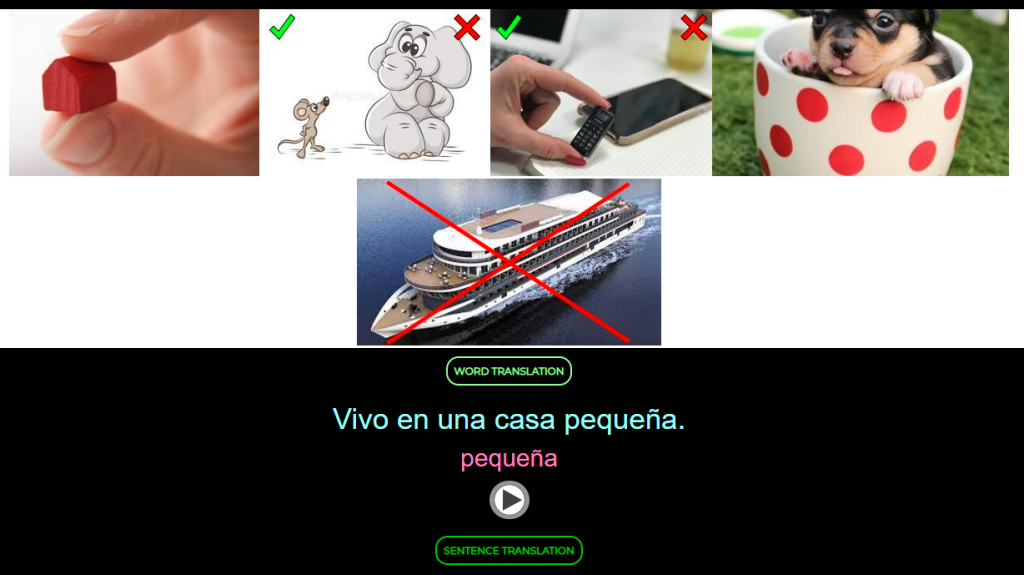
Back side
- Pictures related to the word
- A sentence and the inflected form of the word
How to study this card
Look at the front of the card.
- Look at the word and say or think of the corresponding word in your native language.
- Use the part of speech (noun, verb, adjective, etc) and definition shown in purple text to help you remember.
Look at the back of the card.
- Look at the pictures
- Listen to the sentence, and repeat it out loud.
Success = you remembered the correct translation of the word in your native language
Failure = you couldn’t remember the translation, or you thought of the wrong translation
See: How to grade yourself (above)
Final Notes
In this tutorial we covered two types of flashcards:
- New Word Card: this card gives you a sentence in your target language with a blank and some pictures. You have to guess the missing word.
- Word-Sentence Card: this card gives you the word in your target language, and you have to say the word in your native language.
These are two basic brain exercises that will begin to build a world of vocabulary in your new language. For most words, that’s all you need. In another tutorial we’ll learn about other types of flashcards that you may need to help you practice other language skills.
Leave a Reply
You must be logged in to post a comment.